Innovation
The Gap Between a Great Care Pathway and a Great Outcome? It's Almost Never the Protocol.
3 min read
To receive communications about products, events and other exciting announcements
2 min read
Robotics are transforming operating rooms across the world. What began as experimental technology is now part of daily surgical practice and it’s just the beginning.

In 2023, the global orthopedic surgical robots market reached nearly USD 2 billion
By the end of 2030, it is estimated that robotic assistance could count for ~ 70% of all U.S. TKA procedures, based on a national projection model.
Yet amid this technological evolution, one question continues to surface: Are robots replacing surgeons or are they helping them reach new levels of precision and efficiency?
Surgical Robotics aren’t new. The first recorded use on a human patient took place in 1985 during a neurosurgery biopsy, and applications have expanded ever since. In urology and general surgery, robotic technologies are now standard tools, used to enhance precision and vision during complex cases.
In urology, robotic‑assisted radical prostatectomy has become the dominant approach, with more than 90% of U.S. prostatectomy cases performed robotically . In gynaecology, minimally invasive approaches now make up the majority of procedures, with robotic techniques playing an increasingly important role in expanding access to less invasive surgical care,
Experience from these specialties shows that robotic systems deliver greatest value when they act as an extension of the surgeon’s expertise. By managing repetitive or highly technical tasks that demand consistency, they allow surgeons to focus on what matters the most – the individual patient and the intraoperative decisions that rely on human judgement.
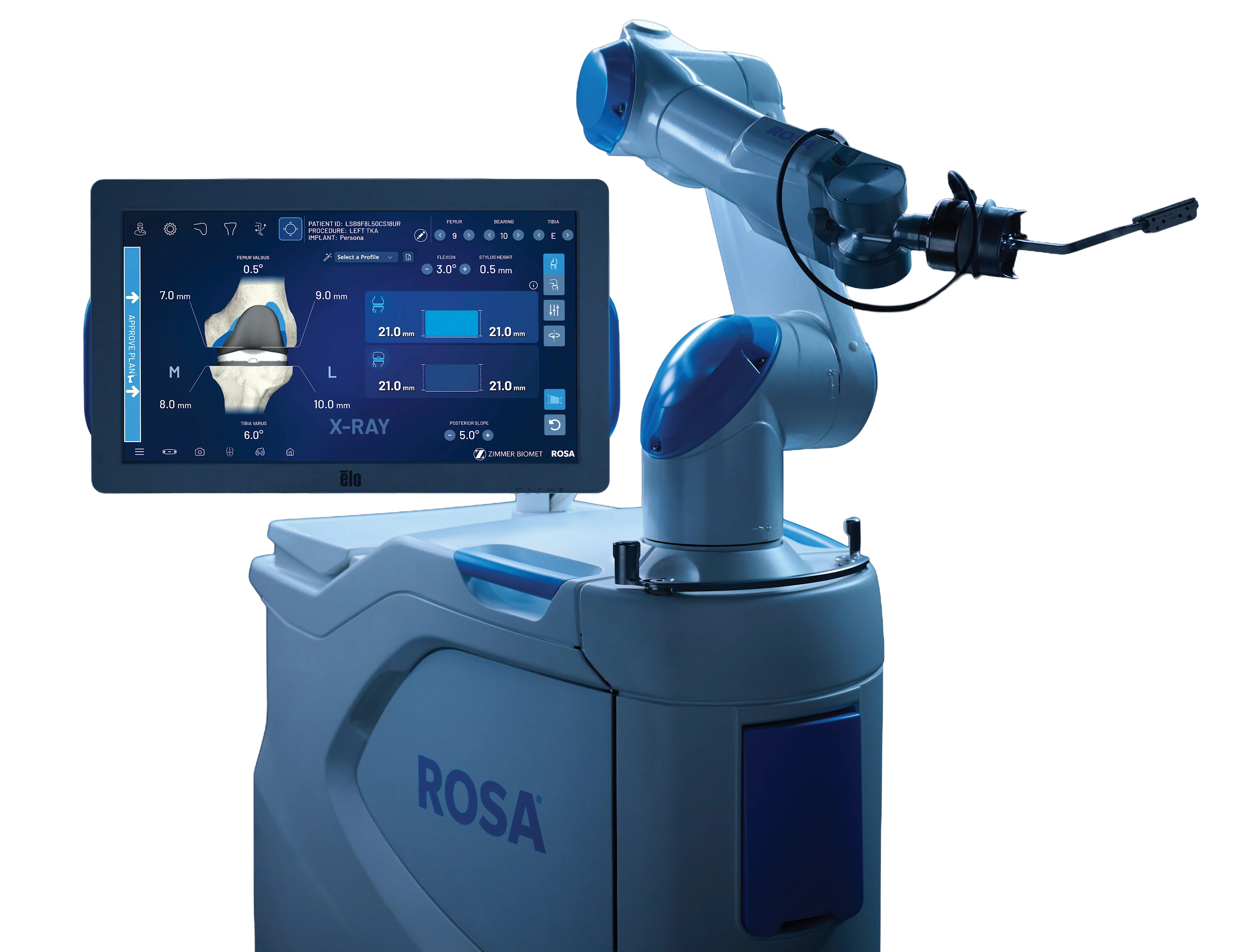
In orthopaedics, robotic systems are increasingly used for tasks such as bone preparation and implant placement, helping make procedures more predictable and repeatable. For hospitals, this consistency supports operational efficiency and optimised procedure times. For surgeons, it means greater confidence in achieving desired implant placement across diverse anatomies and patient needs. The goal of these advances lies in their support for clinical expertise, not in replacing it. By leveraging digital planning, patient-specific solutions, and precise robotics, the aim is to empower clinical teams and streamline workflows, without compromising the individualised care that defines high-quality surgery.
While today’s systems are “robotic-assisted”, a new wave of automation is emerging. Fully autonomous robots – capable of performing defined surgical steps independently under surgeon supervision – are now on the horizon.
The Human at the Core
No matter how advanced the technology becomes, surgery will always relay on human expertise – knowledge, experience, intuition and judgement that no algorithm or robot can replicate. When technology is thoughtfully integrated, it becomes a trusted partner, not a replacement.
The story of robotics in orthopedics is ultimately one of collaboration. Technology empowers skilled surgeons to achieve exceptional precision and consistency, while surgeons bring insights and compassion that define patient care.
As adoption accelerates and systems grow more sophisticated, the focus remains the same: delivering the best possible outcomes through the expertise of surgeons, empowered by the latest innovation. Want to find out more about Zimmer Biomet’s ROSA Robotic platform ROSA® Robotic Solutions | Zimmer Biomet or Monogram: Link to Press Release
Innovation

Innovation •
Life at ZB