
Innovation
The Gap Between a Great Care Pathway and a Great Outcome? It's Almost Never the Protocol.
3 min read
To receive communications about products, events and other exciting announcements
5 min read
For younger patients facing hip surgery, the decision often comes down to a trade-off: durability versus function. Total Hip Arthroplasty (THA) is a proven, reliable operation, ' but it involves removing the femoral head entirely. Hip Resurfacing Arthroplasty (HRA) offers a bone-preserving alternative, yet its history is complex.
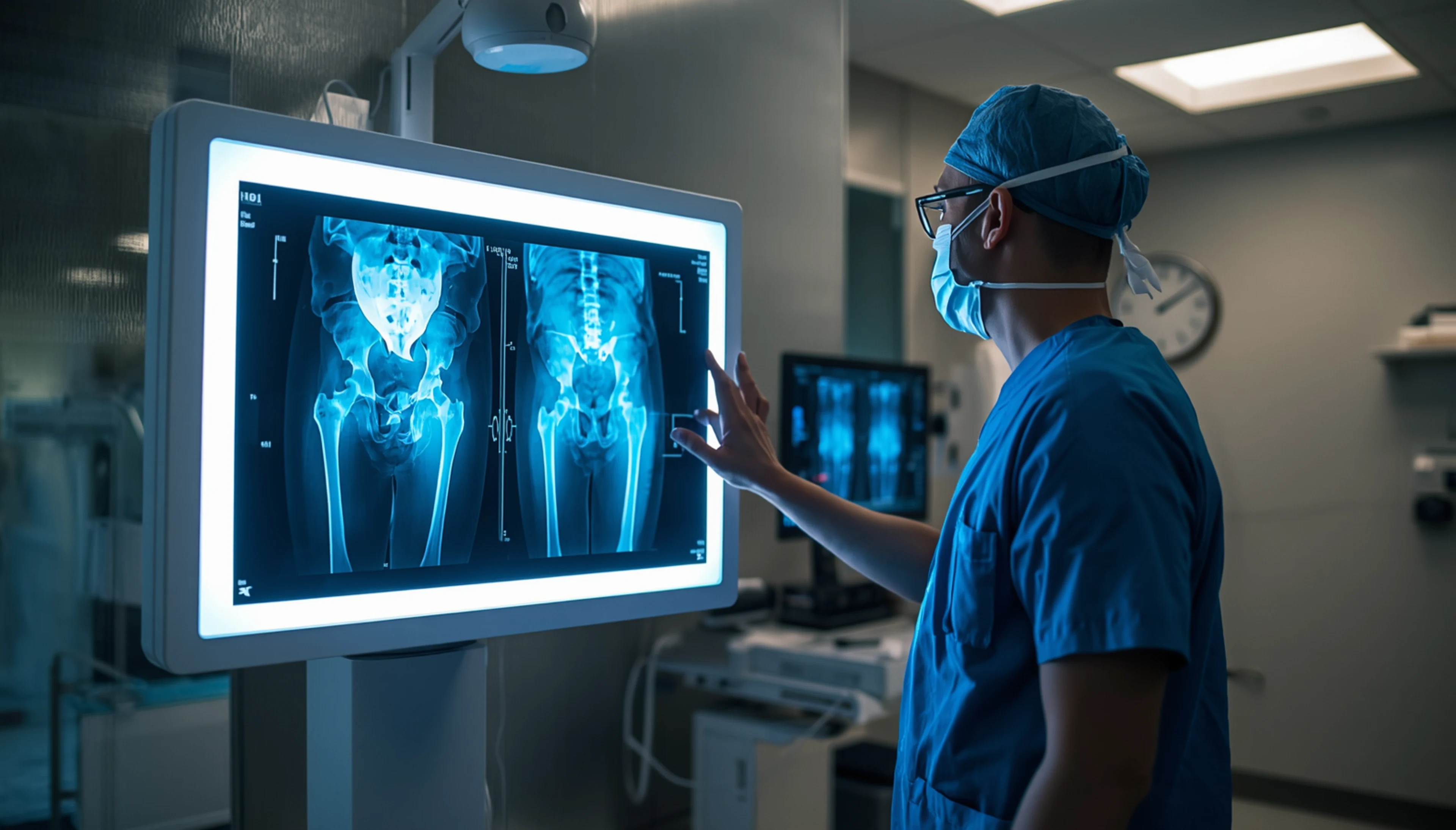
So, what does the evidence actually say? Beyond the headlines of past device failures, how do modern resurfacing implants perform compared to total replacements? And perhaps more importantly, how are new materials like ceramics changing the equation?
This article examines the clinical reality of hip resurfacing today - from long-term survival rates to the biomechanical innovations shaping its future.
Survival of the Fittest: HRA vs. THA
The primary measure of success in joint replacement is survivorship: how long the implant lasts before needing revision.
Historically, total hip replacement has set a high bar. However, modern registry data paints a compelling picture for resurfacing, particularly when specific devices are used in the right patients.
The Data on Durability
When we look at well-designed implants like the Birmingham Hip Resurfacing (BHR), the long-term data is robust.
10-Year Benchmarks: In young male cohorts, the BHR has demonstrated a 96.3% survival rate at 10 years. Similarly, large cohort studies of the Conserve Plus implant show a 98.7% survival rate over the same period.
The Long View: For patients under 50, cumulative survivorship can reach 88.9% at 22 years.
These figures are comparable to - and in some active subgroups, better than - conventional THA. The key differentiator is often the patient's activity level. Standard hip replacements can wear out faster under the stress of high-impact sports, whereas resurfacing components are designed to withstand heavier loads. '
Why Function Matters More Than Just Years
Survival rates tell us if the implant is still there, but not how the patient feels. This is where resurfacing often pulls ahead.
Because HRA can preserve the femoral head, it can maintains more natural biomechanics. The large diameter of the resurfacing head (often 50mm or more) is designed to closely mimic the natural anatomy, offering greater stability and a lower risk of dislocation compared to the smaller heads used in standard THA.
Gait Analysis and Activity
Recent studies reinforce this functional advantage.
Symmetry: Gait analysis revealed that HRA patients often exhibit a more symmetrical walking pattern than THA patients. A study comparing ceramic HRA to THA in women found that the resurfacing group achieved a 33% increase in maximum walking speed, compared to just 13% in the THA group.
Return to Sports: Young males with resurfaced hips reported higher activity scores and return to high-impact sports like running or tennis more effectively than those with total replacements.
The Material Debate: Metal vs. Ceramic
The "bearing surface" - the materials that rub against each other inside the joint - remains the central engine of innovation in hip resurfacing.
The Metal-on-Metal (MoM) Challenge
Traditional resurfacing relies on cobalt-chromium molybdenum alloys. These Metal-on-Metal (MoM) bearings are incredibly durable, but they have a biological cost. Ion release is typically minimal under optimal conditions, but elevated metal ion levels can occur in circumstances such as incorrect component sizing, malposition, or suboptimal surgical technique, leading to increased wear at the bearing surfaces.
For most patients, these ions are harmless and excreted by the kidneys. However, a small subset of patients can develop Adverse Local Tissue Reactions (ALTR) or pseudotumours. This risk has historically limited the use of resurfacing in women (who tend to have smaller bones and higher sensitivity risks) and requires patients to undergo regular blood monitoring.
The Ceramic Solution
To solve the biological problem of metal ions, the orthopaedic industry is pivoting toward Ceramic-on-Ceramic (CoC) resurfacing.
Ceramics are bio-inert. They are not associated with corrosion or the provocation of immune responses seen with metal debris.
Innovations: Devices like the H1® Hip Resurfacing and ReCerf® may be playing a role in this shift. Ceramics (like Biolox®delta) have a proven track record of over 16 years in total hip replacements.
Expanding the Pool: If successful, CoC implants could remove the primary barrier to resurfacing for women and patients with metal sensitivities. Preliminary data suggests that CoC resurfacing could be more tolerable and effective, potentially offering the mechanical benefits of resurfacing without the biological risks of metal.
Precision and the Future of Surgery
Innovation isn't just about what we put in the body, but how we put it there. The margin for error in hip resurfacing is smaller than in total hip replacement. Correct component alignment and precise surgical technique are crucial for success: a misaligned cup or femoral component can result in increased edge loading (with subsequent accelerated wear) or even a femoral neck fracture,.
Best-practice guidelines highlight several essential aspects to achieve better results. Accurate positioning of the acetabular component is vital - most literature recommends an inclination angle between 40° and 50° and proper anteversion to maintain lubrication and reduce the risk of edge loading,. Excessive inclination (>55°) has been associated with increased ion release and risk of adverse tissue reactions. Additionally, preserving as much healthy bone as possible is key, and intra-operative assessment using trial components and fluoroscopy can help guide correct placement.
Surgeon experience also plays a critical role; higher surgical volumes and adherence to established protocols are linked to improved implant longevity and reduced revision rates. Following these technical recommendations and established guidelines helps improve outcomes, minimise complications, and deliver the longevity and functional advantages that hip resurfacing can offer.
Robotics and Navigation
This is where technology could reshape surgical standards in the future:
Robotic Assistance: Emerging robotic systems allow surgeons to plan the procedure in 3D before making an incision. During surgery, the robot guides the reaming of the bone to ensure the implant is placed within a fraction of a degree of the plan.
3D Femoral Orientation and Depth Control: Robotic platforms enable comprehensive 3D visualisation of the femur, assisting the surgeon in identifying the optimal axis for the femoral component and ensuring the acetabular component is placed at the appropriate depth. This enhanced orientation helps avoid malalignment, improves component fit, and supports precise reconstruction of hip biomechanics.
Reducing Failure: By ensuring perfect orientation, robotics could mitigate mechanical failures and edge loading, further extending the lifespan of the implant regardless of whether it is metal or ceramic.
Redefining the Standard of Care
Hip resurfacing has matured. We appear to have moved beyond the era of uncertainty toward an age of more evidence-led precision, helping to restore confidence in this approach.
The clinical data is clear: for the right patient, with the right surgical technique resurfacing can offers survivorship that can rival total hip replacement while intended to deliver successful functional outcomes. As we look to the future, the combination of inert ceramic materials and robotic precision can help to solve the remaining challenges of the past.
These innovations suggest a future where bone preservation may no longer be just a niche option for young men, but could be a viable, potentially leading solution for a broader demographic of active patients.


