Surgical Area
The Evolution and Patient Selection in Hip Resurfacing
4 min read
To receive communications about products, events and other exciting announcements
4 min read
Cementless femoral stem removal remains one of the most demanding steps in hip revision surgery.
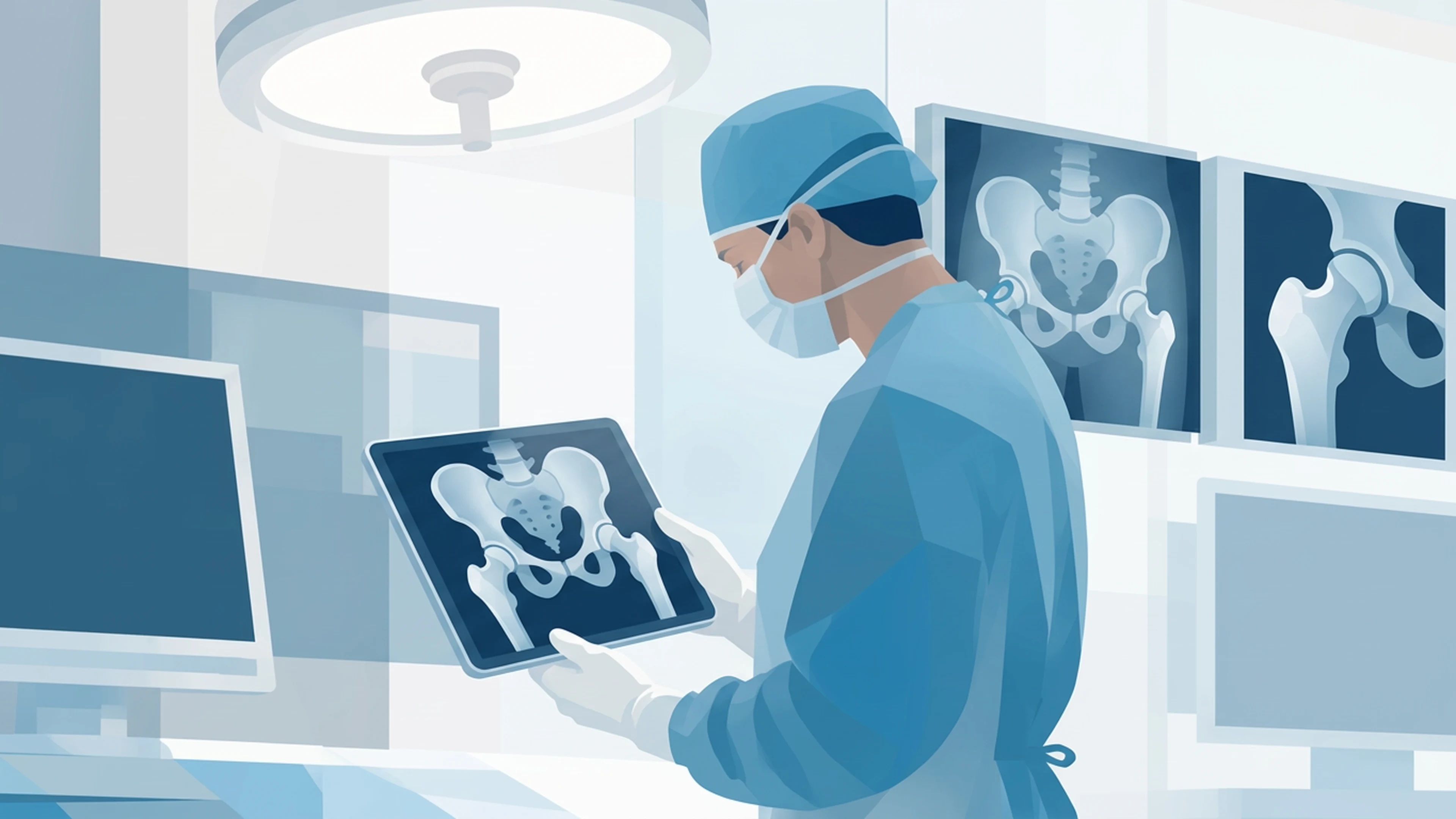
When the stem-bone interface is firmly fixed, every movement counts. The surgeon must balance controlled disruption against the need to protect a proximal femur that may already be compromised, and the margin for error is slim.
This article looks at why the step is so technically demanding, what an effective procedural approach needs to deliver and how one purpose-built instrument set addresses these needs. Read on for a practical view of the access, control and bone-preservation priorities that shape the extraction.
Why Femoral Stem Removal Is So Demanding
A well-fixed cementless stem does not release easily. Bone ongrowth and ingrowth can create a firm interface along multiple implant surfaces and disrupting it without sacrificing host bone is rarely straightforward.
Access is the first constraint. The areas that matter most, the medial calcar, the lateral shoulder of the implant and the surface running under the greater trochanter, each sit at a different angle and depth. Reaching them with instruments not shaped for the task can potentially compromise control and increase the risk of bone loss.
The second constraint is the balance between thoroughness and preservation. Aggressive disruption may free the stem faster but may be at the cost of the proximal femur, which is often the foundation for the revision construct.
The Role of the Extended Trochanteric Osteotomy
When conventional techniques cannot disrupt the interface, surgeons may turn to an extended trochanteric osteotomy (ETO). The ETO provides direct access to the stem and can be an appropriate, well-established choice in many revision scenarios.
It also carries trade-offs. An osteotomy can extend the procedure, can introduce fixation and healing requirements and can add to the overall reconstruction burden. For appropriate cases, an approach that helps disrupt the interface while reducing the reliance on an ETO is therefore of clear interest.
What an Effective Approach Needs to Deliver
Stepping back from any single instrument, the procedural requirements for femoral stem removal are consistent. An effective approach should address three linked priorities.
Targeted Access to Different Implant Surfaces
The interface is not uniform, so the instrumentation should not be either. Reaching the medial calcar, contouring the lateral shoulder and following the implant surface each call for a geometry suited to that region. Matching instrument shape to anatomical challenge supports cleaner access and better control.
Controlled Interface Disruption
Control is the difference between a measured extraction and an unpredictable one. Instruments need adequate stiffness to follow the implant surface without deflecting, and a handling design that lets the surgeon use direct force precisely during both impaction and extraction.
Proximal Femur Protection
Every decision at the interface should weigh the integrity of the proximal femur. Minimising bone loss and limiting damage to the host bone protect the foundation for fixation and can influence the complexity of the reconstruction that follows.
Meeting these three priorities together, rather than in isolation, is what makes the step manageable.
A Practical Example: The Exodus™ Revision Hip System
One instrument set built around these requirements is the Exodus Revision Hip System for femoral stem removal from Zimmer Biomet. It is designed to facilitate disruption of the stem-bone interface and may help avoid the need to perform an ETO in appropriate cases. The system is designed to support:
Minimal bone loss
Extraction with minimal effort
Minimal damage to the proximal femur
Three Geometries for Three Access Challenges
The set uses three single-use blades, each shaped for a specific part of the task:
Stem Contouring Medial Blade: designed with a slot to work around the neck geometry and access the bone interface at the medial calcar, with a gouge shape that contours the implant and follows the medial calcar distally
Curved Lateral Blade: designed with a gouge shape to contour the lateral shoulder of the implant and a radius to follow the implant and tuck under the greater trochanter
A/P Chisel: a thin chisel designed to follow the implant surface with adequate stiffness to reduce the risk of bending
Together, the three geometries are designed to support the access challenges outlined above.
Control and Workflow Considerations
Control at the interface depends on the handle as well as the blades. The reusable Exodus handle features an oversized strike-plate that protects the hand from the mallet and enables both impaction and extraction without changing instruments. A curved strike-plate undersurface supports a firm grip, and the ergonomic silicone grip is designed to reduce fatigue during use.
The single-use blades carry a practical benefit for the wider team. They are supplied pre-sterilised and ready to use, eliminating the need for reprocessing and sterilisation between procedures. A new blade is used for each procedure.
Bringing It Together
Femoral stem removal can be a technically demanding step, but the priorities are clear: targeted access, controlled disruption and protection of the proximal femur. Approaches that address these needs together are intended to provide surgeons with a predictable extraction pathway and are intended to reduce reliance on an ETO in appropriate cases. Instrument geometry, handle design and workflow all contribute to that outcome. When selecting a system, it is worth reviewing how each element maps onto the specific challenges of your revision cases.
All content herein is protected by copyright, trademarks and other intellectual property rights, as applicable, owned by or licensed to Zimmer Biomet or its affiliates unless otherwise indicated, and must not be redistributed, duplicated or disclosed, in whole or in part, without the express written consent of Zimmer Biomet.
This material is intended for healthcare professionals only. Distribution to any other recipient is prohibited. Zimmer Biomet does not practice medicine. Each surgeon should exercise his or her own independent judgment in the diagnosis and treatment of an individual patient, and this information does not purport to replace the comprehensive training surgeons have received. For indications, contraindications, warnings, precautions, potential adverse effects and patient counselling information, see the package insert or contact your local representative; visit www.zimmerbiomet.eu for additional product information. Check for country product clearances and reference product specific instructions for use. Not for distribution in France.